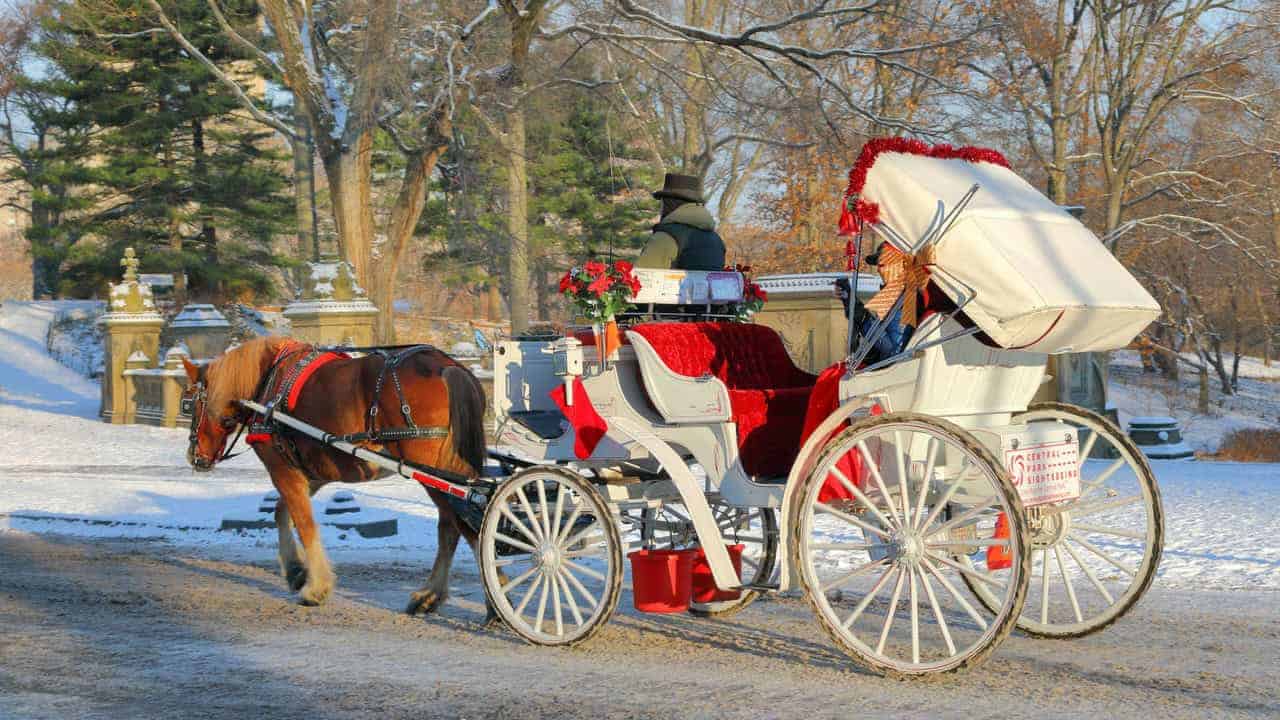
From June 1, 2028, horse-drawn carriages will no longer be allowed to operate in Central Park or anywhere else in New York City. Mayor Zohran Mamdani signed Romanch’s Law on Thursday, November 19, 2026, at 9:30 a.m. at City Hall, bringing to an end, after more than 150 years, one of the city’s most photographed — and most debated — attractions. Just minutes after the signing, the carriage drivers’ union filed suit against the city in federal court in Manhattan.
In other cities in different countries, similar measures have been taken over the years with the aim of protecting horses, which are often worn down by the conditions they are made to work under in this tourist activity. In this case, however, the incident that led to the bill was not that of a horse exhausted under the sun on scorching summer days, or at least that was not the final straw. In fact, the law is named after Romanch Mahajan, the 18-year-old tourist from India who died on June 17, 2026, after being thrown from a carriage in Central Park.
For anyone planning a trip to New York, the bottom line is simple: carriage rides will still be available for about another year and a half, then they will be gone. Here’s what the law says, why it came about now, and what changes for visitors.
What Romanch’s Law Does
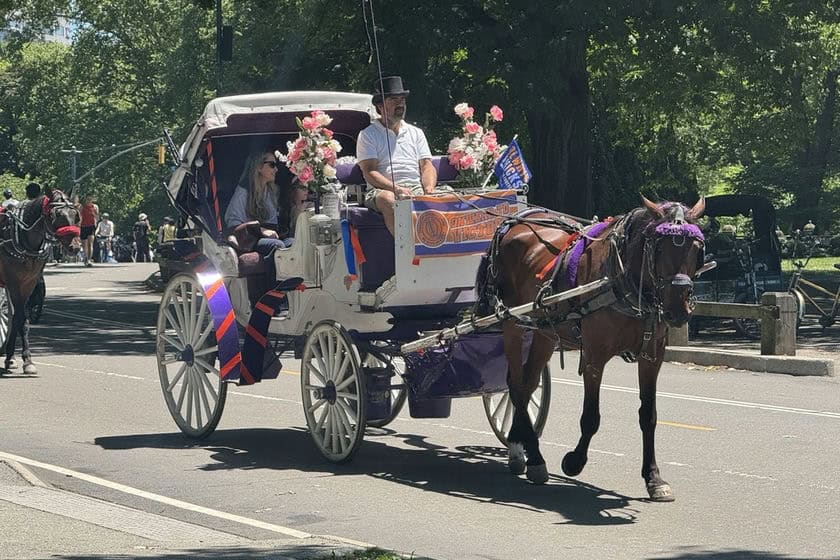
The law (Intro 943-A, sponsored by Council Member Christopher Marte) bans horse-drawn carriages on all New York City streets, including Central Park. The City Council passed it on October 22, 2026, by a vote of 40 to 7, with 2 abstentions: a veto-proof majority.
Here are the main points:
- Total ban starting June 1, 2028. All licenses expire on May 31, 2028, and no new ones will be issued.
- Medallions frozen immediately. Now that the law is in effect, medallions — the licenses that allow carriages to operate — can no longer be sold or transferred.
- Worker transition plan due by April 1, 2027: career counseling, job training, and city buybacks of medallions.
- Protections for the horses. Owners may keep them, but may not sell them for slaughter or transfer them to other carriage operations.
- No requirement for replacement electric carriages, unlike previous proposals.
The Death of Romanch Mahajan and Other Incidents
On June 17, 2026, 18-year-old Romanch Mahajan was visiting New York with his parents and younger brother; the family had arrived from India two days earlier. During the carriage ride, the driver stepped down to take a photo of the family, and the startled horse bolted without its driver. His mother fell out of the carriage. Romanch jumped out to help her, fell to the ground, and hit his head; the carriage then struck another carriage and overturned. Mahajan died in the hospital that same evening.
According to the Central Park Conservancy and the union itself, it was the first human fatality involving a horse carriage since carriages began operating in the park more than 150 years ago. The union pointed out that the rules prohibit drivers from letting go of the reins to take photos. The family, on the other hand, is seeking $105 million in damages from the city, arguing that the horse was spooked by stray voltage from Con Edison infrastructure — an issue the new law does not address.
It wasn’t the first time a carriage horse had bolted or collapsed. On June 9, 2026, just eight days earlier, a carriage horse named Deniz collapsed and died during a ride in the park near East 90th Street. In August 2025, a horse named Lady died near the stables in Hell’s Kitchen, and that same month another horse, Bambi, bolted through the park, forcing passengers to jump out. The best-known case remains that of Ryder, who collapsed in the street in 2022 and was euthanized months later: the bill was originally called Ryder’s Law in his honor.
Nearly Two Decades of Failed Attempts
Carriages have been tied to Central Park since its beginnings: in the 1850s, Frederick Law Olmsted and Calvert Vaux designed the park’s curving drives with carriages specifically in mind. The debate over banning them, however, began in the City Council in 2007, and every attempt since then had stalled.
During his 2013 campaign, Bill de Blasio promised to ban them “on day one.” His plan, which included new stables inside the park, was introduced in 2016 but later shelved. After the collapse of the horse Ryder in 2022, Ryder’s Law was introduced, but it spent years stuck in committee. Then, in August 2025, the Central Park Conservancy, the nonprofit that manages the park, dropped its long-standing neutrality for the first time and called for a ban.
In September 2025, Mayor Eric Adams came out in favor of the ban and signed Executive Order 56, which stepped up enforcement and laid the groundwork for shutting down the industry. In July 2026, after Romanch’s death, Julie Menin became the first sitting City Council Speaker to publicly back a ban. On July 15, a nine-hour hearing brought supporters and opponents face to face, paving the way for the Council’s October vote and the mayor’s signature.
The ban has also divided national politics: President Donald Trump publicly criticized it on Truth Social.
What Will Happen to the Horses
The most frequently cited estimates put the number at around 200 registered horses in the industry. They live in multi-story private stables between Hell’s Kitchen and Hudson Yards — the best known is Clinton Park Stables on West 52nd Street — and every day they make their way through Midtown traffic to reach Central Park.
The law does not require owners to give up their horses: they can keep them. By June 1, 2027, however, they must certify to the city’s Health Department that the horses will not be sold for slaughter, transferred to other carriage operations, or used for any inhumane purpose. The Mayor’s Office of Animal Welfare says sanctuaries and rescue organizations are ready to take them in, but the details of their “retirement” are still being worked out. This is also one of the points being challenged in court: the union considers the ban on selling the horses to carriage operators in other cities or states unlawful.
Workers, Medallions and the Union Lawsuit
According to the city, about 200 people are affected, including medallion owners, carriage drivers, and stable hands. Their union, Transport Workers Union (TWU) Local 100, has always opposed the ban and pushed for stricter safety rules instead. There are 68 medallions in circulation, held by 63 owners. Before the law, medallions changed hands for $300,000 to $400,000 each: the plaintiffs estimate their total value at $20.4 million to $27.2 million, while a city agency put it at around $70,000 per medallion.
The city has promised to buy back the medallions and has announced a workforce transition program, the Horse Carriage Worker Industry Program, offering career counseling, job training, entrepreneurship support, and tuition assistance. The law, however, only requires the city to consider compensation, without guaranteeing it. That is the basis for the class action filed on November 19 in federal court in Manhattan (Southern District of New York). The union, a medallion owner, and two carriage drivers argue that the city is taking their property and licenses without just compensation, in violation of the U.S. Constitution and the New York State Constitution. They are also asking the court to restore medallion transfers while the case is pending. TWU International President John Samuelsen called the law “an unconstitutional abomination.” So the timeline could still change: a lot will depend on how the federal judge rules.
What Changes for Visitors to New York
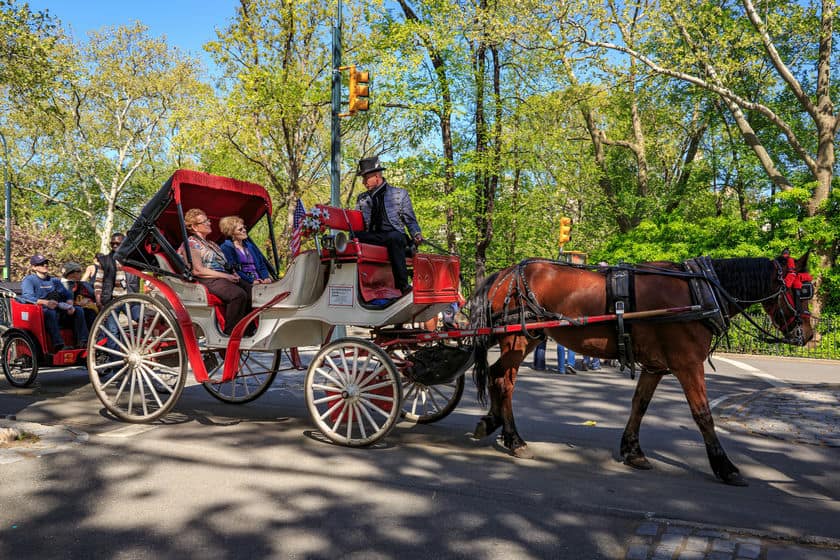
Until May 31, 2028, nothing changes: carriage rides will continue under the current rules, and anyone who has already booked won’t lose their ride. If a carriage ride is on your bucket list, plan it for the coming months, especially since options will likely shrink as the deadline approaches. The city caps fares at $72.22 for the first 20 minutes, plus $28.89 for each additional 10 minutes; the price is per carriage (up to four adults), tip not included. Here’s how to book a carriage tour.
Electric Carriages Instead of Horses?
For now, electric carriages are not in the plan. Unlike the old Ryder’s Law, which called for replacement electric carriages, the new law does not name any substitute. Mamdani has, however, ordered a feasibility study on electric carriages and pedal-assist e-bikes, both inside Central Park and along its perimeter.
A model already exists: in Philadelphia, which has just approved a similar ban, the nonprofit Carriage Horse Freedom offers vintage-style electric carriages, with no animals involved. And in recent years, other major cities have banned horse-drawn carriages, including Montréal in 2020 and Chicago as of January 1, 2021.
Alternatives to Carriage Rides
If you’d rather skip the carriages, or you’re visiting after June 2028, there are plenty of other ways to explore Central Park. Here are the main ones:
- By bike: the full loop around the park is about 6 miles and takes most people 45 to 60 minutes. Guided bike tours are also available.
- By e-scooter: a good alternative to a bike, but only on the park drives, not on footpaths or bridle paths.
- On a guided walking tour: the best way to see all the park’s highlights and learn its history along the way. We cover the various options in our article on Central Park tours.
Source: Official statement from the Mayor of New York, November 19, 2026