The United States officially has a new national park: Chiricahua National Park, located in southeastern Arizona. It became the 64th U.S. national park on October 20, 2026, when President Donald Trump signed the Chiricahua National Park Act into law.
This isn’t a newly discovered natural area or a destination opening to visitors for the first time. Chiricahua has been protected since 1924 as a National Monument. The new law recognizes its natural, geological, and cultural significance, officially elevating it to National Park status, as confirmed by the National Park Service.
Chiricahua is now Arizona’s fourth national park, joining much better-known destinations such as Grand Canyon, Saguaro, and Petrified Forest. For a broader overview, check out our guide to the best parks in Arizona.
Although the new designation doesn’t expand the park’s boundaries, it could bring greater attention to this lesser-known corner of the American Southwest, which has long remained off the beaten path.
Chiricahua: A Wonderland of Rocks
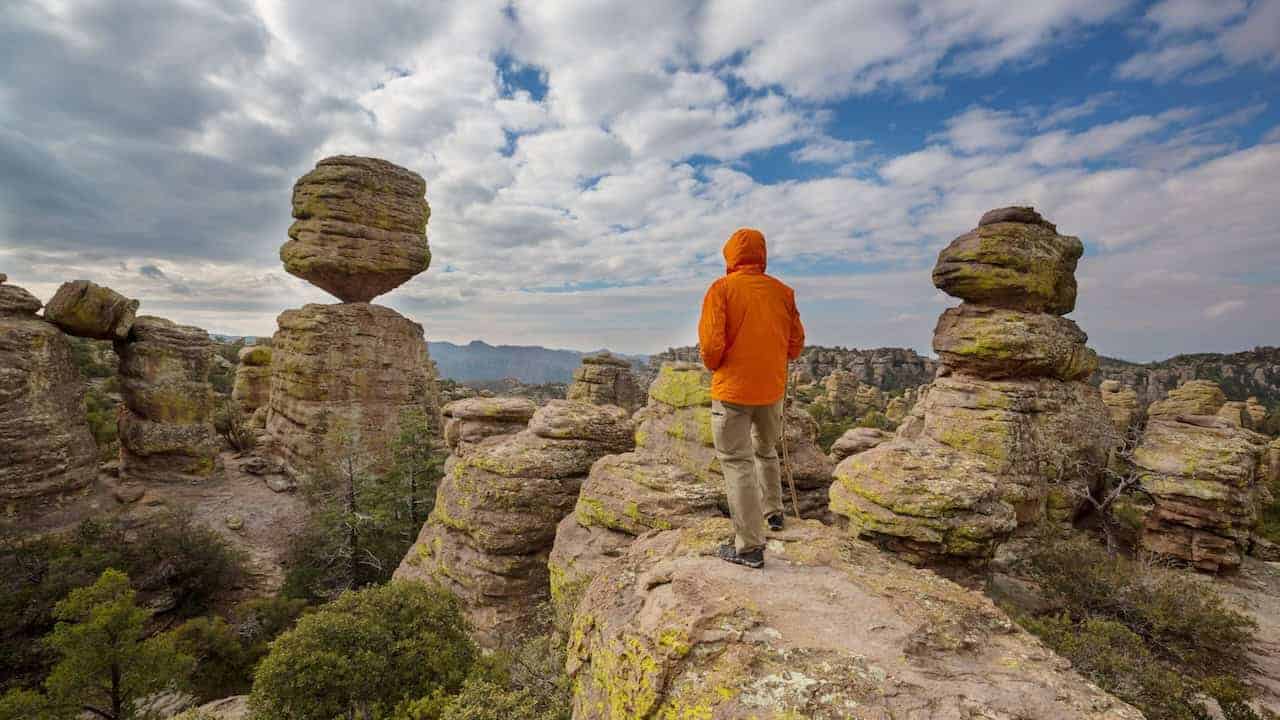
The landscape of Chiricahua National Park is unlike what most people picture when they think of Arizona’s deserts. Instead of vast sandy expanses and towering cacti, you’ll find hundreds of rock spires, pinnacles, and strangely shaped boulders, some of which seem to defy gravity.
It’s no wonder the area is known as the “Wonderland of Rocks.”
These spectacular formations are the result of a massive volcanic eruption approximately 27 million years ago. Over millions of years, erosion carved the volcanic rock into a maze of towering spires, narrow passages, and balancing boulders.
The park protects approximately 12,000 acres of the Chiricahua Mountains, part of a mountain range known as one of Arizona’s sky islands. These isolated mountain ranges rise dramatically above the surrounding desert and grasslands, creating unique habitats that support a remarkable diversity of plants and wildlife.
The area also holds significant cultural and historical importance, as it is part of the ancestral homeland of the Chiricahua Apache.
How to Visit Chiricahua National Park
Chiricahua National Park is located in southeastern Arizona, near the New Mexico border, about 37 miles southeast of Willcox and roughly a two-hour drive from Tucson.
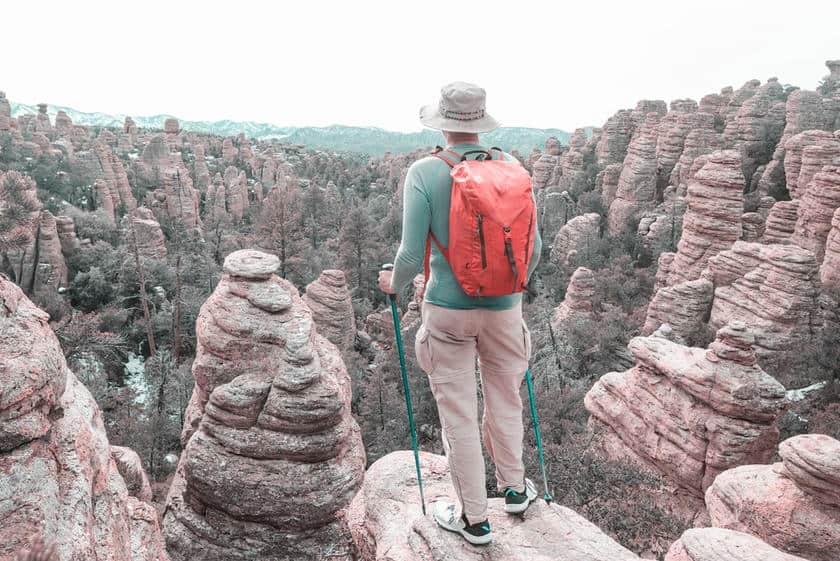
A car is essential for reaching the park, as public transportation options are extremely limited. Once inside, you can explore the Bonita Canyon Scenic Drive, an 8-mile paved road that winds through spectacular rock formations and mountain scenery before reaching Massai Point, one of the park’s most impressive viewpoints.
From Massai Point, you can enjoy sweeping views of hundreds of towering rock spires rising above the surrounding landscape. It’s one of the best places to appreciate Chiricahua’s unique scenery without having to tackle a long hike.
Admission to Chiricahua National Park is free, and no entrance pass is required. The park is open year-round, although weather conditions may occasionally affect access to the scenic drive.
Other places worth visiting in southeastern Arizona include Tombstone, the historic mining town of Bisbee, and Fort Bowie National Historic Site. You can also combine a visit to Chiricahua with Saguaro National Park, near Tucson.
If you’re flying into Arizona, Tucson International Airport (TUS) is the closest airport to the park, while Phoenix Sky Harbor International Airport (PHX) offers a wider range of flight connections. If you’re planning a longer road trip, you might also consider exploring New Mexico, just east of Arizona.