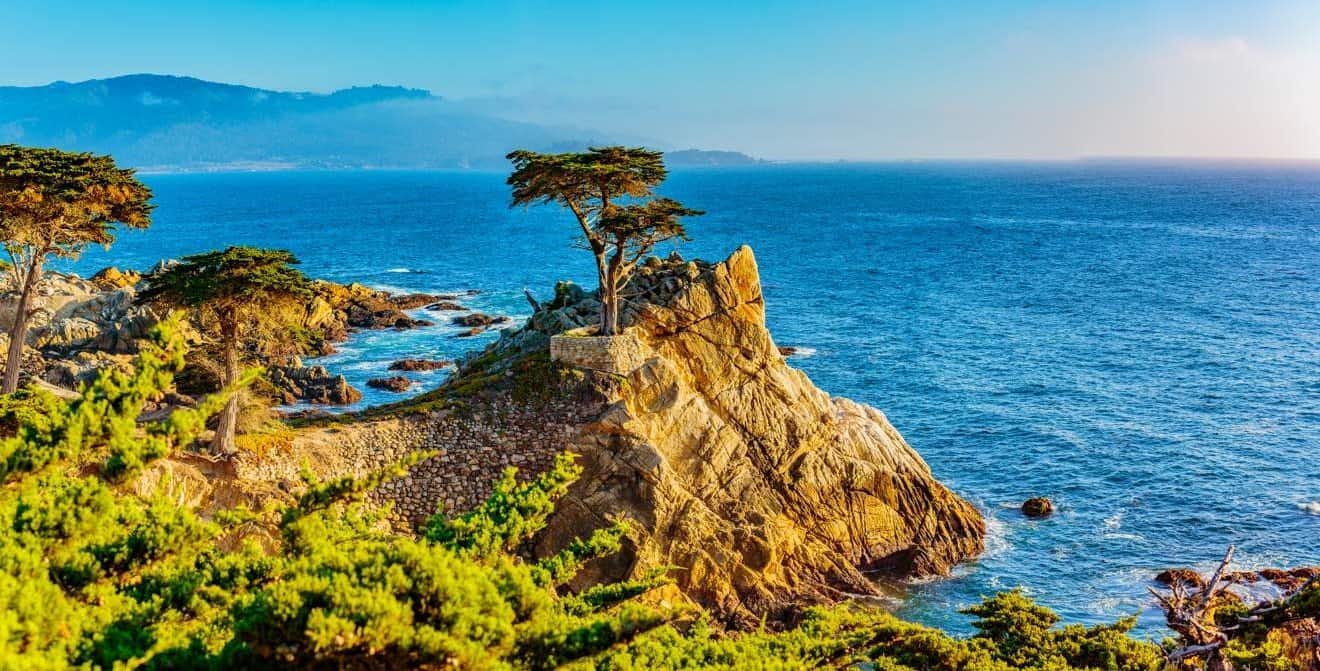
Monterey, thanks to its fortunate location, is one of the busiest stopping points on various California road trips: whether you’re driving along the coast, tackling the spectacular scenic road Highway 1, whether you find yourself in charming San Francisco, or whether you’re heading straight for Yosemite National Park, the Monterey Peninsula is one of the stops to consider for a day trip.
Let’s then see what the entire area has to offer, trying to answer these questions: what to see in Monterey? How many days is it best to stay in the area? How should you visit the city and the surroundings of the eponymous Peninsula? Which attractions should you prioritize if you’re just passing through? How do you choose the best area to stay in?
Monterey: information and brief history
The name Monterey dates back to 1602, when the explorer Sebastián Vizcaíno named the entire bay Puerto de Monterrey, in honor of the then viceroy of New Spain. The actual founding, however, took place later, in 1770, when the missionary Junípero Serra built the Mission San Carlos Borromeo there, and when the explorer Gaspar de Portolà established the Presidio of Monterey there in order to defend the harbor from invasions.
The city of Monterey remained under Spanish control until 1822, when it passed to Mexico following Mexico’s independence from Spain the previous year. Monterey thus continued to serve as the capital of Mexican California until 1846, when it was occupied by American forces during the Mexican-American War. California was formally ceded to the United States in 1848 and became the 31st state in 1850.
During this period, the city played an important commercial role, since it was the only port of entry for taxable goods in California (all sea shipments had to pass through the Custom House, the oldest government building in the state, which can still be visited today as one of the most important stops on the Monterey Path of History).
An important historical event was the Battle of Monterey on July 7, 1846, during the Mexican-American War: it was on this very day that U.S. Navy Commodore John D. Sloat raised the American flag over the Monterey Custom House, thereby claiming California as U.S. territory.
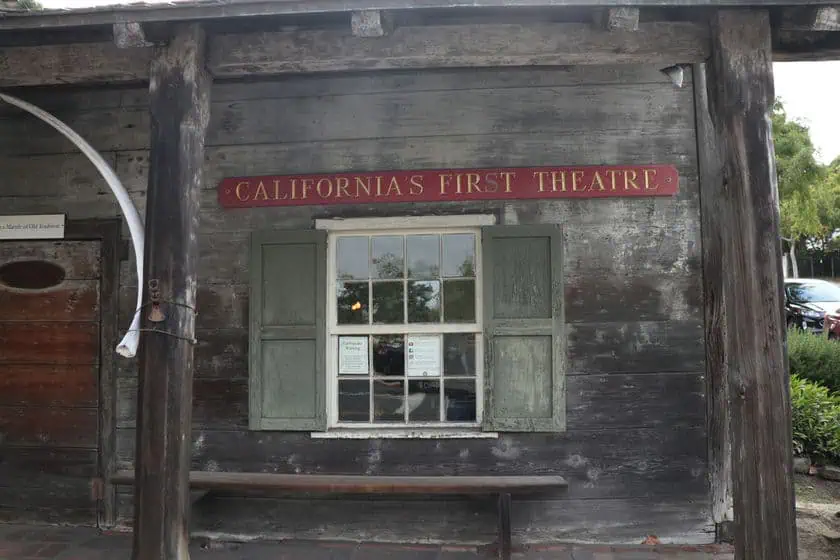
Monterey’s historical significance should not be underestimated at all; just think that not only the state’s first theater, but also the first brick house, the first publicly funded school, the first public building, the first public library, the first printing press, and the first newspaper in California were founded here. Some of these buildings have been preserved to this day and are part of the already mentioned Monterey Path of History.
From a cultural and artistic point of view as well, Monterey has a great deal to offer, since it was a gathering place for important painters associated with the en plein air and tonalist styles, as well as writers including John Steinbeck and Robert Louis Stevenson. Finally, Monterey was the site of the famous Monterey Pop Festival, the hippie event that preceded Woodstock and drew more than 200,000 people in 1967.
Location and Directions
Monterey is located on the California coast, within the peninsula of the same name, the Monterey Peninsula, a very interesting area from a naturalist point of view that includes the towns of Carmel by the Sea, Pebble Beach, Pacific Grove, and Monterey itself. You can get there by driving Highway 1 along the coast, or by taking 101, the road that connects San Francisco and Los Angeles inland, and which links to Monterey via State Route 68.
Monterey is located about 120 miles south of San Francisco, approximately 40 minutes from Big Sur (but just 15 minutes from the beginning of the scenic stretch of Highway 1 that leads there), and about 3.5 hours from Yosemite National Park (by the way, here’s an interesting Monterey to Yosemite itinerary).
Monterey: how many days?
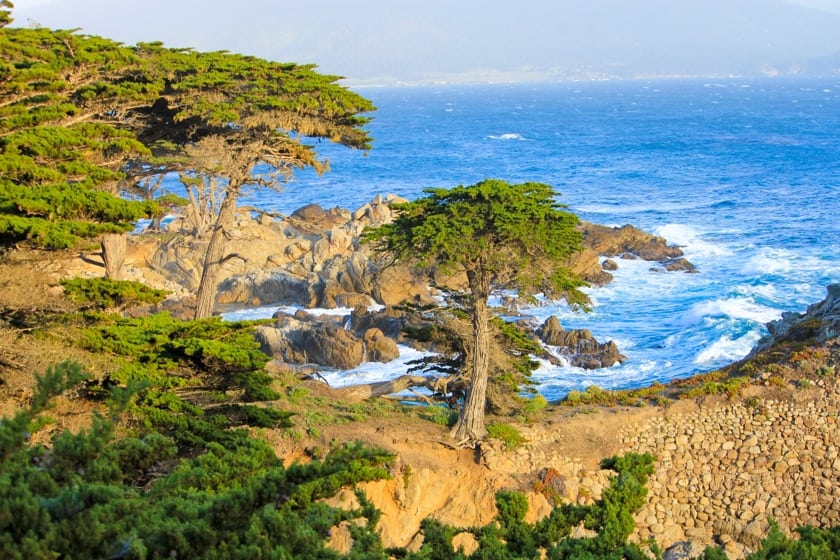
Located 120 miles south of San Francisco and at the northern edge of the scenic Big Sur coastline, Monterey is situated on the peninsula of the same name (Monterey Peninsula), a fascinating area characterized by rocky headlands, cypress trees, and cliffs plunging into the Pacific Ocean.
To visit the city’s various attractions and those in the surrounding area, you may need at least 2 days; however, due to the many stops usually required on a California tour, people generally tend to spend no more than 1 day in this area. In that case, you’ll have to decide whether to focus on the Peninsula area or the town itself, depending on your preferences.
Things to do in Monterey: the city’s main attractions
Monterey Bay Aquarium
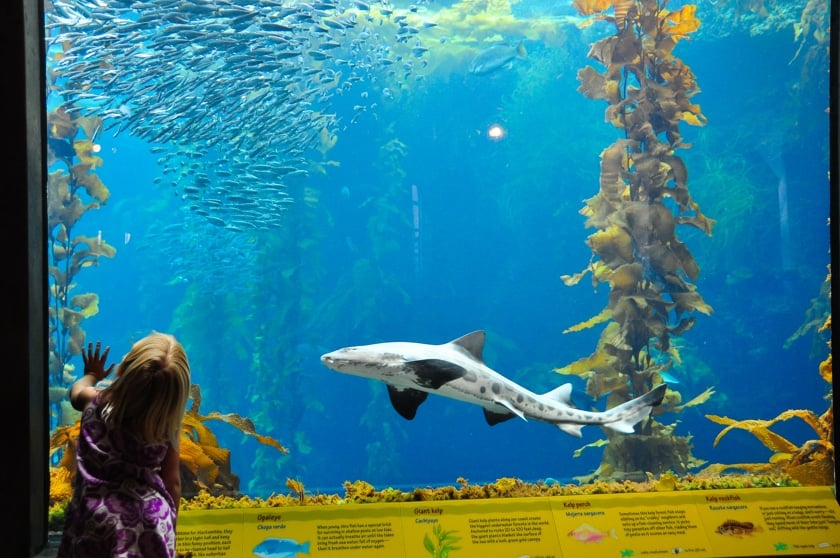
Visiting Monterey without stopping at its notorious Aquarium would truly be unforgivable! In fact, it is one of the finest examples on the entire West Coast, with an impressive variety of marine species. It is located at 886 Cannery Row and admission costs $65, with discounts for teenagers and free entry for younger children. The price may seem rather high; however, its beauty is such that it more than makes up for the financial effort.
During peak season, it’s recommended to visit the Aquarium on weekdays because it gets especially crowded on weekends and finding parking isn’t easy. The facility is open from 10 a.m. to 5 p.m. on weekdays; from 9 a.m. to 5 p.m. on Saturdays and Sundays.
History Trail
Monterey can boast unexpected historical significance: as mentioned earlier, it was for a time the capital of California and still preserves interesting traces of its former glory, especially in the form of historic buildings and old adobe houses.
Among the things to see in Monterey, you will therefore find some of the finest buildings from California’s Spanish past, all concentrated within just a few blocks of the waterfront. This is the Path of History, a route that links the city’s many historic sites, all gathered under the umbrella of the Monterey State Historic Park.
To follow the historic itinerary, all you need to do is follow the yellow tile markings in the street, which connect all the points of interest, or simply follow the map on the official website. Many of the sites are privately occupied, but you can still enter the state-owned sites without paying the admission fee.
Scroll to see all images
The most interesting buildings to see are:
- Larkin House (1830), the first house built in the city in the colonial style
- Old Custom House (1827), the oldest government building on the West Coast, located in Custom House Plaza, not far from the pier
- Colton Hall Museum and Jail (1849), still furnished as it was during the California constitutional convention, with one of the earliest maps of the West Coast inside
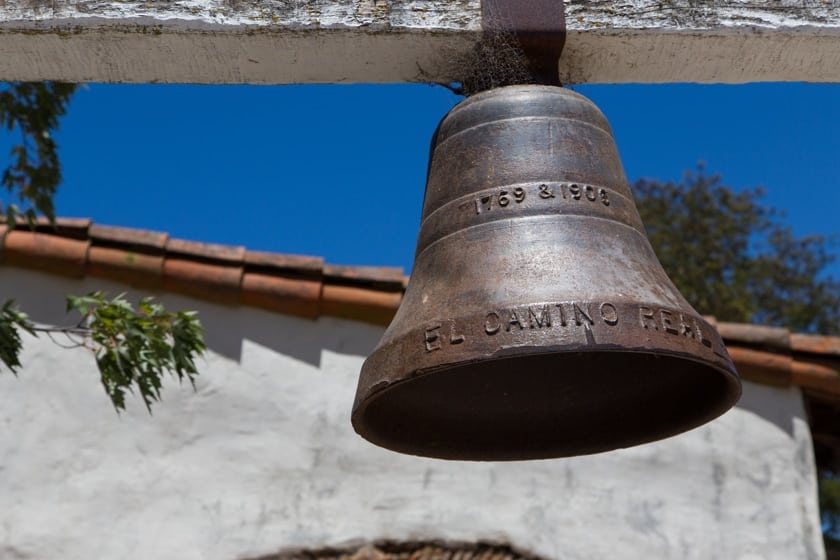
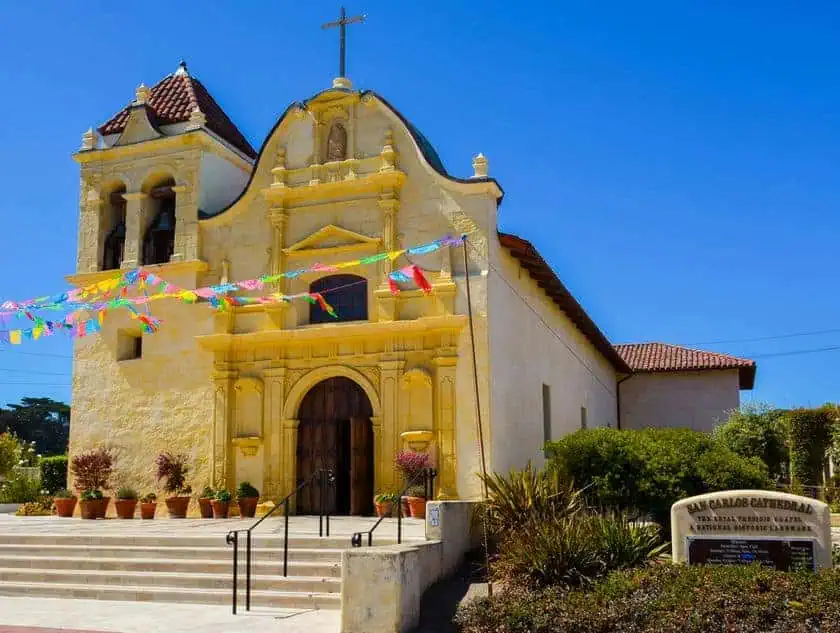
- San Carlos Cathedral (1770-1794), founded by Father Junípero Serra as the Mission of Monterey, this beautiful church is the oldest building in the city, part of El Camino Real, the route of the Spanish missions along the California coast
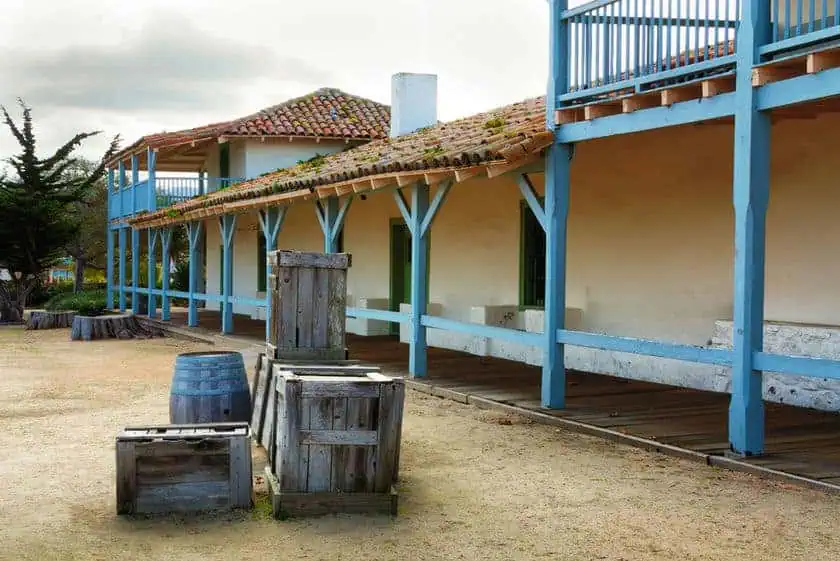
- Pacific House Museum (1847): originally used as a supply depot by the United States Navy, this beautiful adobe building was later turned into a courthouse, pub, church, and more. Today it houses a museum on the city’s history
- Stevenson House (1840): it was the home of the famous writer Robert Louis Stevenson, who lived here in 1879. Today it is a museum.
Other interesting stops along the route are Doud House, Presidio of Monterey Museum, O’Donnell Library, Old Whaling Station, and Vizcaino-Serra Landing Site.
Fisherman’s Wharf
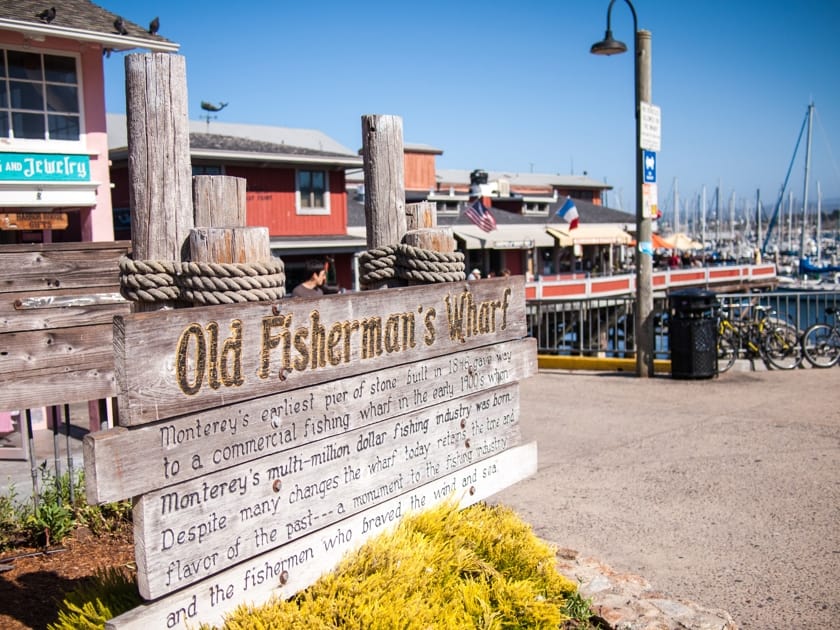
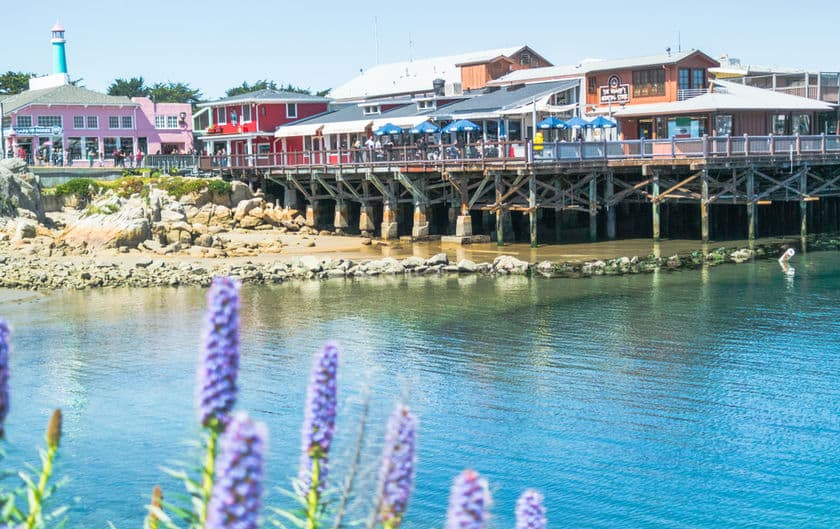
Here we are in one of the most touristy areas, Monterey’s old wharf, which is reached from a small square in front of the Custom House. In this area, not far from the Monterey Harbor Monument, sea otters often gather, so it can be a great opportunity to observe them up close.
The Fisherman’s Wharf won’t be as charming as its counterpart in San Francisco (or even as much as the Pier 39), however, you can still enjoy a pleasant stroll along the pier, sampling some clam chowder offered by the hawkers who will try to lure you into their restaurants, browse the various little shops on the wharf, and set off on a whale watching tour.
Cannery Row
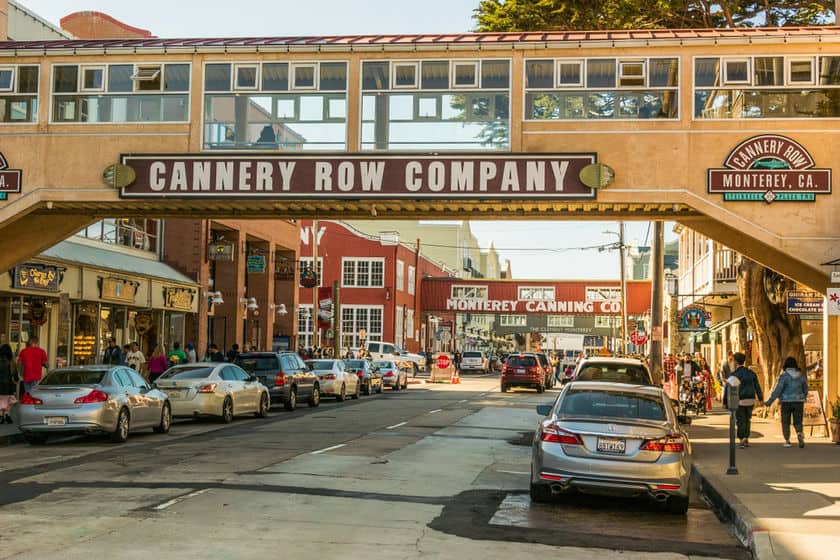
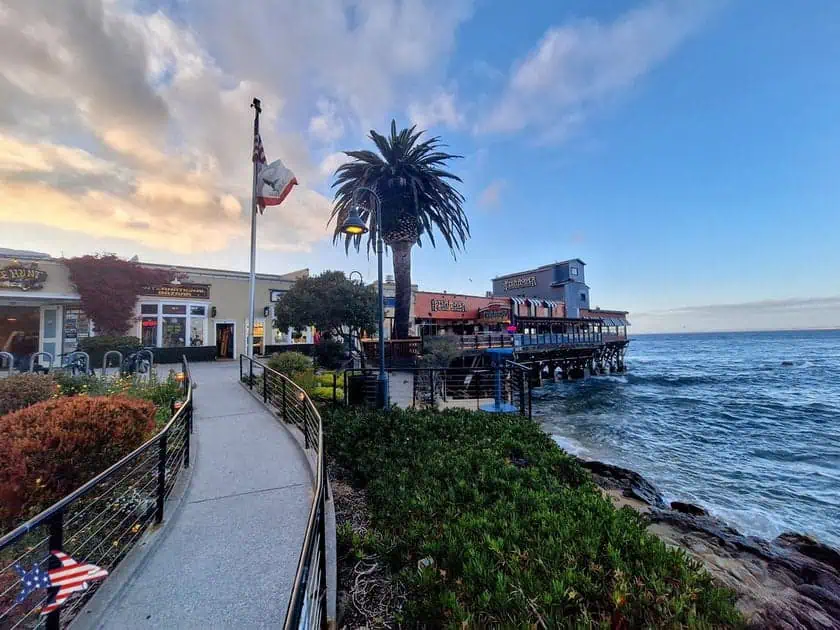
Cannery Row, once the heart of the fishing industry, was immortalized by John Steinbeck in one of his novels, which portrayed the life and atmosphere of the area in the 1930s. Today it’s teeming with storefronts, shops, restaurants, and tourists.
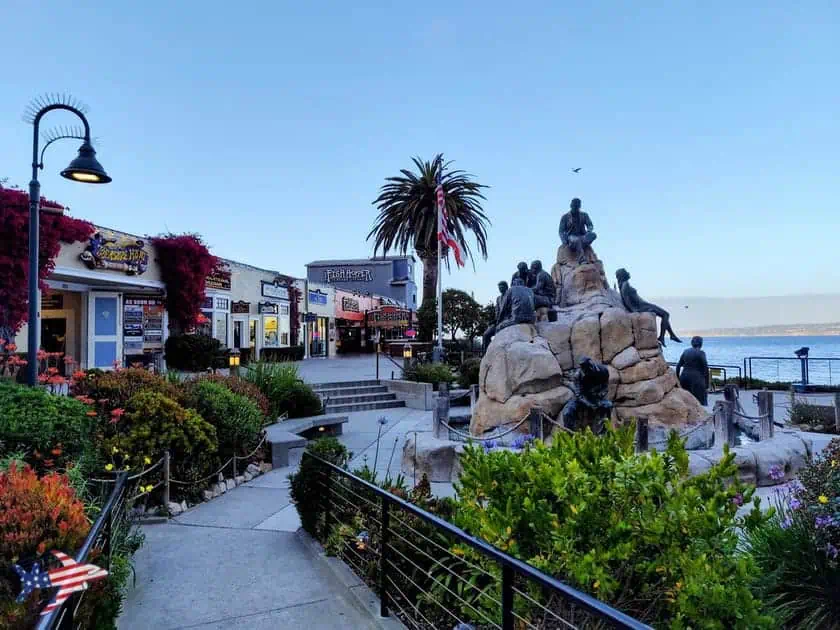
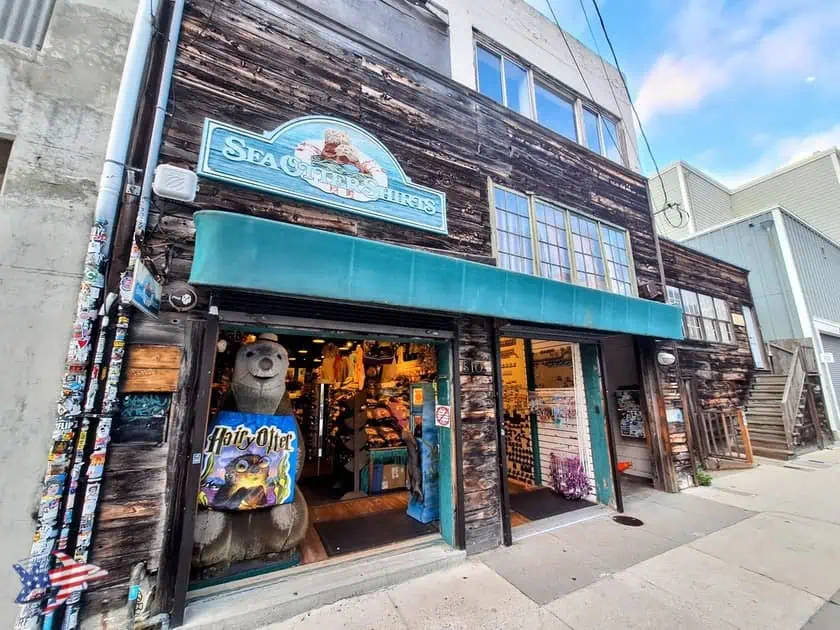
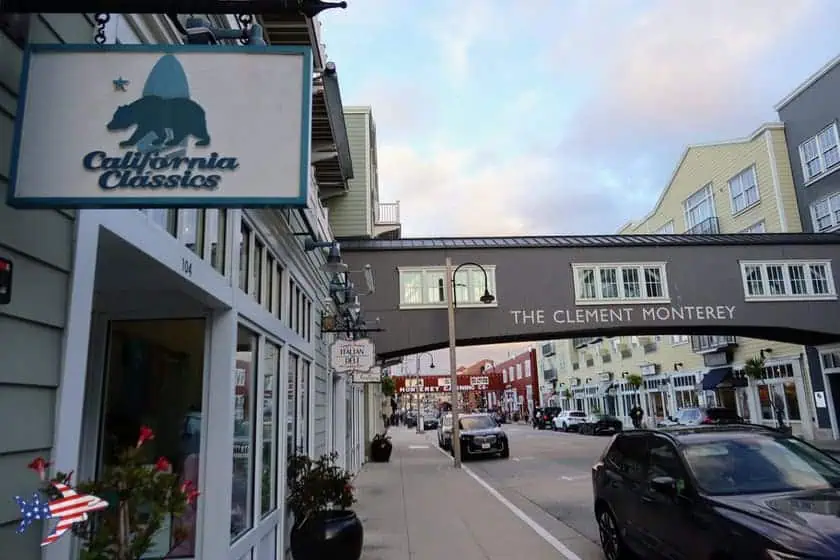
Swipe to view all photos
Among the places of interest to include in your on-site visit are, in addition to the famous Monterey Bay Aquarium, the following:
- the historic buildings Cannery Row Worker Shacks (coordinates) on Bruce Arris Way, a side street off the main road, where workers in the fishing industry once lived;
- the Cannery Row Monument, a waterfront sculpture created by Steven Whyte, depicting important Monterey figures, including John Steinbeck and marine biologist Ed Ricketts;
- Pacific Biological Laboratories: also known as Doc Ricketts’s Lab, the historic marine biology laboratory of Ed Ricketts, whose work inspired John Steinbeck and contributed to pioneering research on marine life;
- Cannery Row Antique Mall, a true treasure trove not only for antique lovers, but also for nostalgics in search of objects that have left a significant mark on the last few decades (cameras, toys, and all sorts of other memorabilia).
- Steinbeck’s Spirit of Monterey Wax Museum, the museum dedicated to Monterey’s most famous historical figure, which unfortunately has closed and we don’t know whether it will reopen.
Monterey Trolley
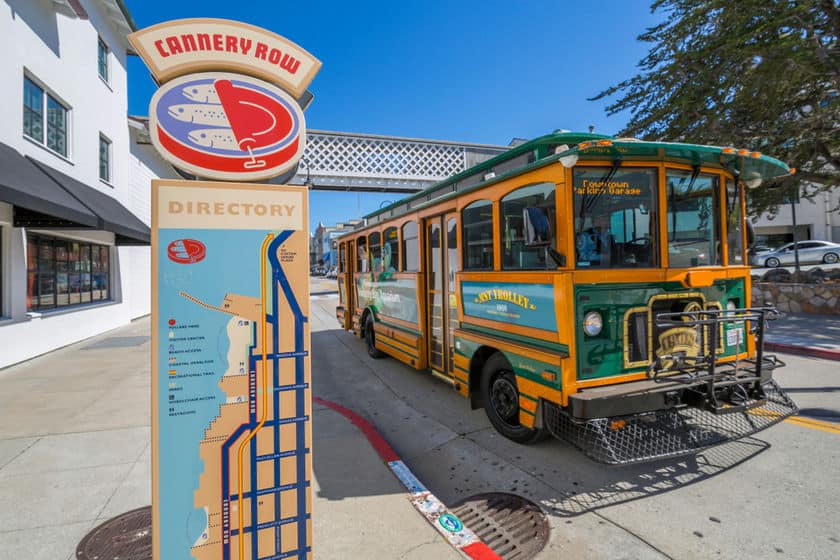
Most of the historical attractions mentioned are located near the route of the free Monterey Trolley, which runs during the summer with departures every 10–15 minutes and serves Downtown Monterey, the wharf, and Cannery Row. Here is a photo with the route map.
Monterey Beaches
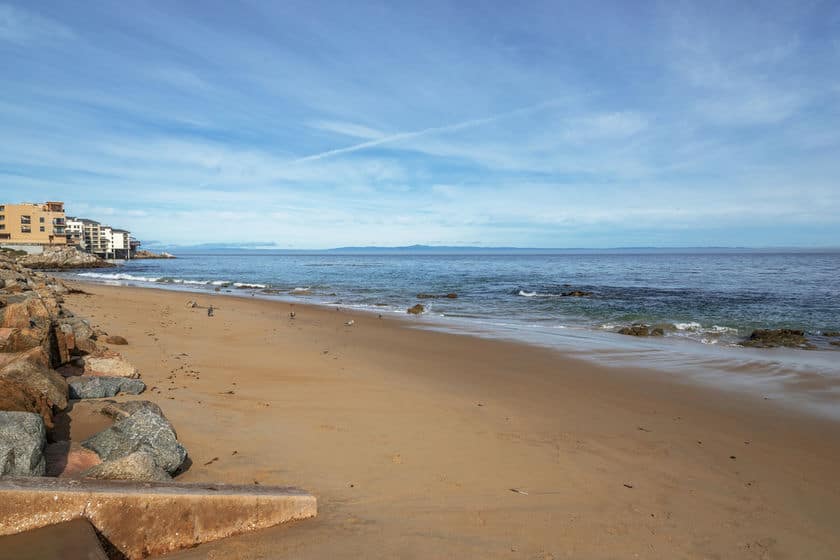
Don’t expect the miles-long California beaches packed with tourists and muscular surfers; in Monterey, you’ll find sunlit stretches and small coves instead. I’m mentioning here only the ones within the town limits, without including the beaches in the neighboring areas (Pacific Grove, Point Lobos, etc.): Monterey’s largest beaches are Del Monte Beach and Monterey State Beach, and they appear as pristine sandy expanses, with the only exception of Monterey Beach Hotel, the only hotel built directly on the beach near the border with the town of Sand City.
Heading west, you’ll come across the coves of San Carlos Beach, near Coast Guard Pier and Breakwater Cove Marina, and McAbee Beach, near the Cannery Row Monument. The first of the two beaches is the more interesting one, especially for scuba diving, thanks to a seabed rich in seaweed, fish, and marine invertebrates, as well as the chance to spot sea otters, which often lounge on the surrounding rocks.
Best Places to Eat in Monterey
As we’ve seen, Monterey and the surrounding area offer plenty of attractions and things to do, so it’s best to plan on spending at least a day here, no matter where you choose to stay overnight. That means you’ll likely eat at least one meal in town, and a few tips could be useful. So here are some targeted suggestions on where to eat. That way you can’t go wrong, since there’s a huge choice of restaurants, but they’re not all of the same quality.
Let’s start with breakfast: there are plenty of cafés where you can have it if it isn’t included at your hotel. Forget the big chains; in the Old Monterey area there are several really good coffee shops, including East Village Cafe (here), Alta Bakery and Cafe (here), and Captain + Stoker (here).
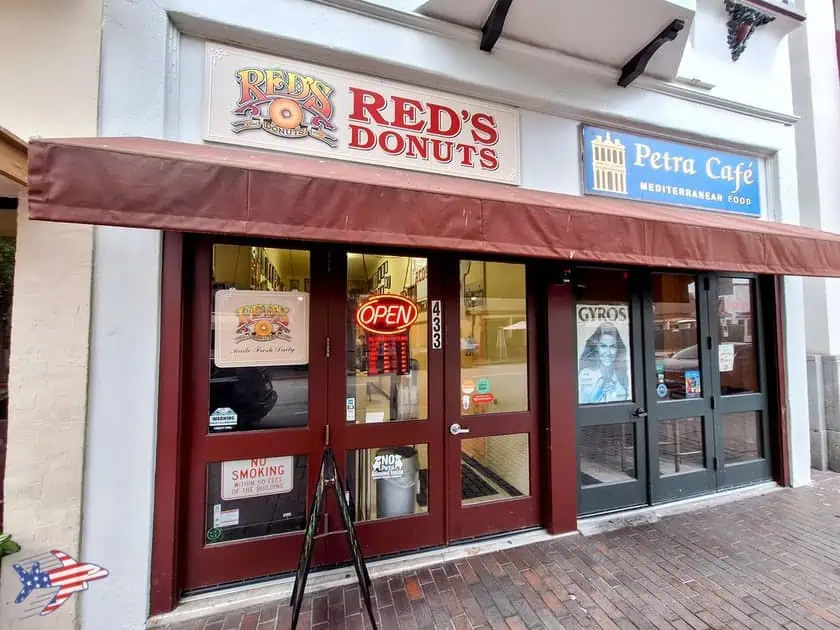
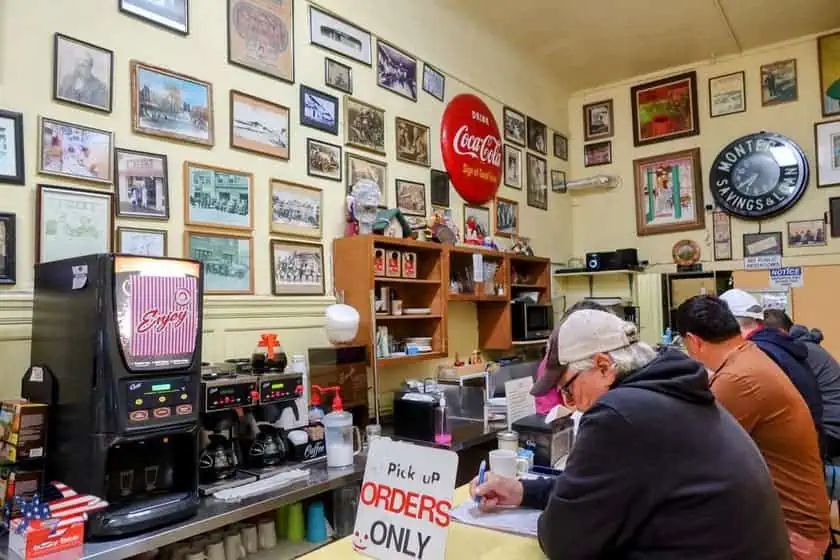
But if you’re looking for great doughnuts, I’ve got a specific recommendation for you. When Andrea and I were in Monterey on one of our trips, we had breakfast at Red’s Donuts (here), a tiny, unassuming little café where they serve only coffee and doughnuts. We sat at the counter and enjoyed some of the best doughnuts we’ve ever had on our travels.
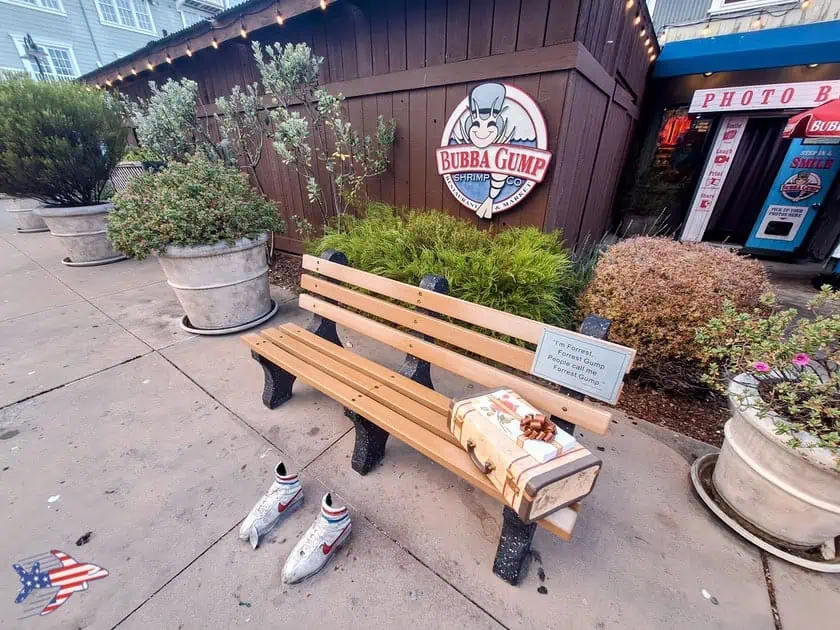
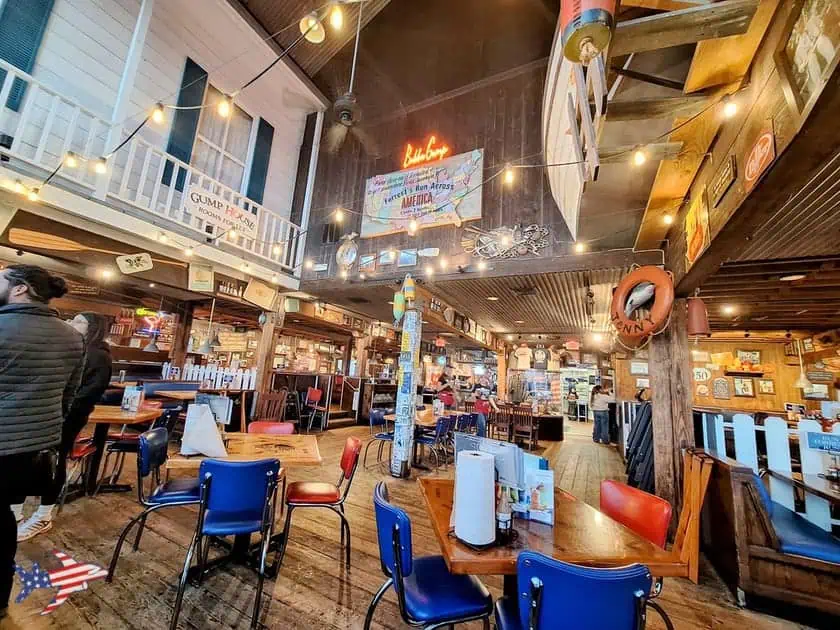
Then we come to the main meals: where to have lunch or dinner in Monterey? Let’s start with a tip on the type of food: this area is famous for fish, and especially for crabs. So you’ll find a large number of restaurants serving fish, shellfish, and seafood. On the city pier, the best in terms of quality are Old Fisherman’s Grotto (here) and Café Fina (here). In the Cannery Row area, I recommend Fish Hopper (here), which is on the pier and has a beautiful view of the ocean. Also with a beautiful view, but a bit more affordable, is Bubba Gump Shrimp Co. (here), one of the locations of this chain inspired by the famous film Forrest Gump. If you love shrimp, this is the place for you: we had dinner there during our stay in Monterey and tried three different kinds of shrimp, which left us truly satisfied! The place is also very distinctive: full of photos and movie-related gadgets that decorate the entire restaurant.
Best Places to Stay in Monterey
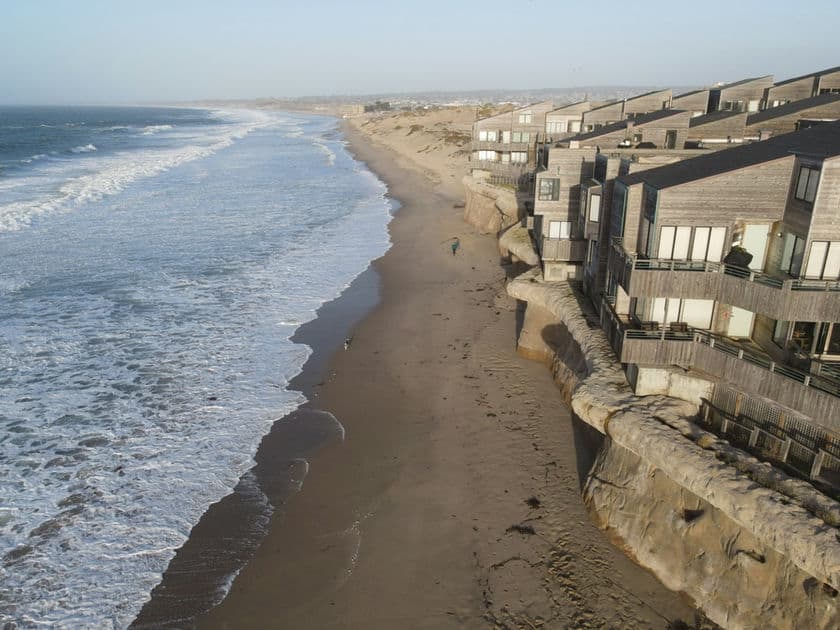
Monterey is an excellent town to stay overnight in, if your itinerary allows it. There are several hotels and, as mentioned in the previous paragraph, lots of places to eat as well. So beyond being a lovely place to visit, it’s also a good place to stay.
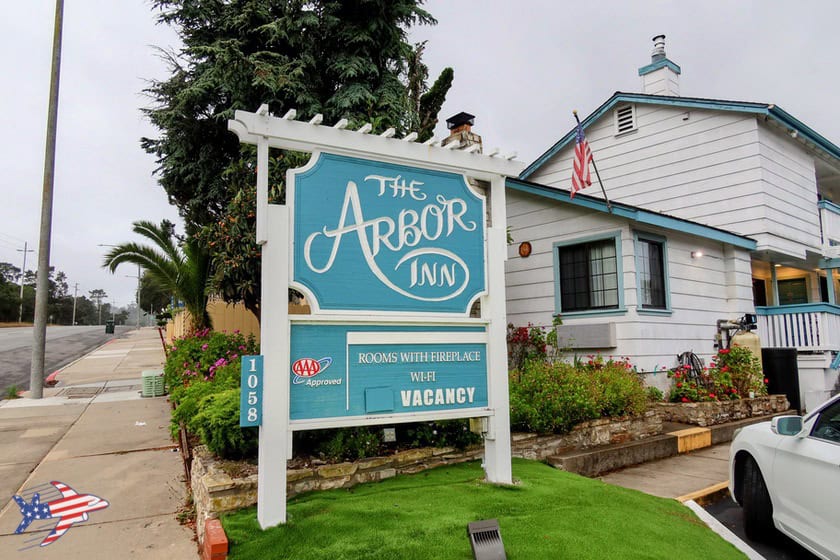
On one of our trips, we stayed overnight at the Arbor Inn Monterey. A simple, fairly standard motel, but with good value for money. The room was basic but clean; the front desk staff was very kind: in short, it turned out to be perfect for a one-night stopover. It’s located just outside the center, in an excellent position both for visiting the city and for saving time when arriving or leaving, since it’s fairly close to HWY1.
Other good hotels to consider are certainly the Munras Inn (another 2-star motel, close to the one we chose); the Best Western Plus Monterey Inn (a classic 3-star from the well-known chain, where you’ll be in safe hands) and the Portola Hotel & Spa (if you’re looking for an excellent 4-star hotel).
In any case, my advice is not to look for a hotel only in the city of Monterey but also in the other towns on the Peninsula. That way, you’ll have a larger selection of accommodations to choose from and better chances of getting a lower price. Here are some links where you can check property rates by area:
- Available hotels in Monterey: list of properties
- Available hotels in Carmel: list of properties
- Hotels available in Pacific Grove: property list
- Available hotels in Pebble Beach: list of properties
Monterey Guided Tours
If you’re in Monterey and want to explore the city with a guide, or if you’re in the mood for a special experience, like a whale watching tour, here are the main activities you can do in Monterey:
- Whale Watching with Chris’ Fishing and Whale Watching
- Whale Watching with Princess Monterey Whale Watching
- Guided snorkeling (2.5 hours)
- Tide Pool Tour with a Naturalist Guide
- Self-guided tour of the 17 Mile Drive by eBike
I’m also including a link below to find interesting activities and things to do in the Monterey Peninsula area:
Monterey Peninsula: visiting the surrounding area
One of the main reasons to stop in Monterey is the chance to explore the surrounding area. The most rewarding option is to take a great road trip along the 17 Mile Drive, one of the scenic drives in the USA you’ll come across on your journey along the California coast. You can find the route map above:
Along the drive and in the surrounding area, you’ll find several charming places worth visiting:
- first of all Carmel, a fairy-tale little gem to which we’ve dedicated an article
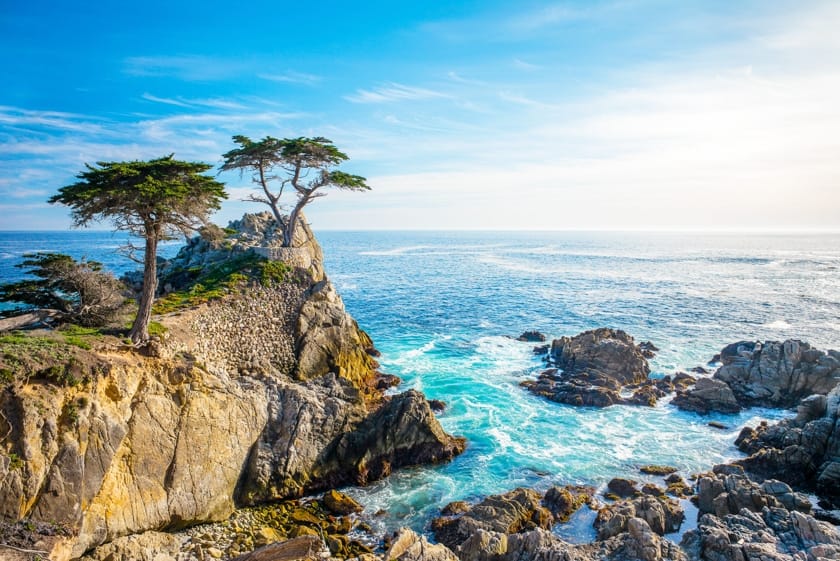
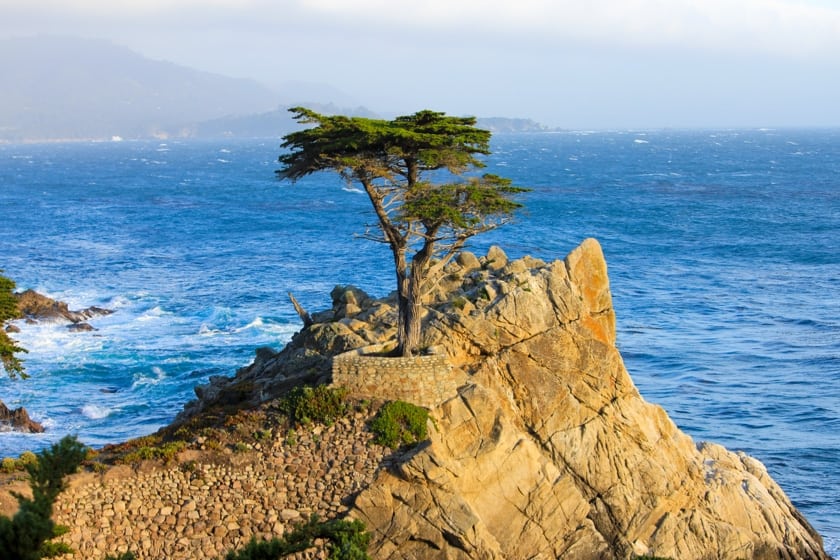
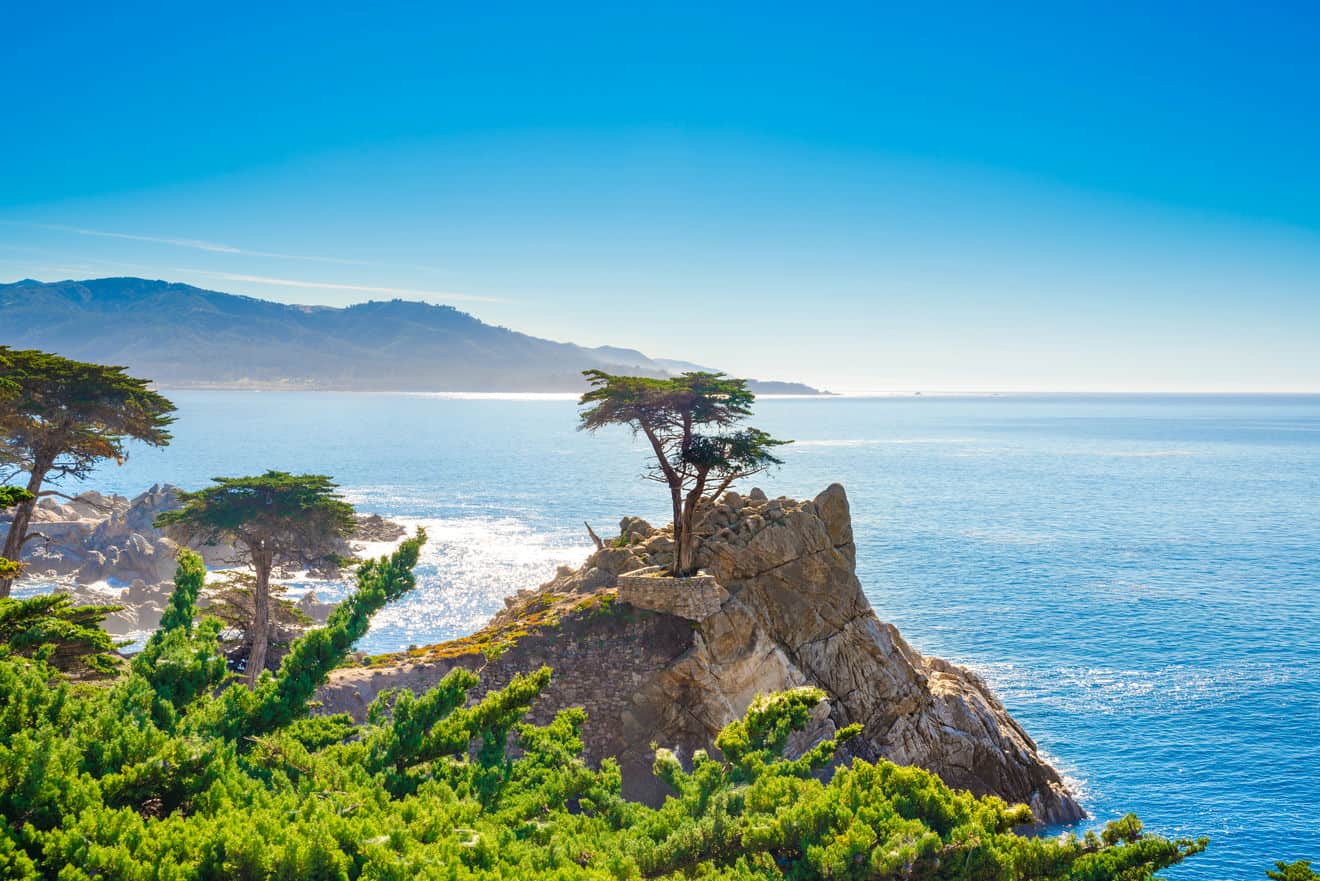
- Pebble Beach, an unlikely stretch of golf courses, stately mansions, trees with eerie silhouettes and romantic ocean views. If you’re in the area, don’t miss the Lone Cypress Tree, a solitary cypress that has become the subject of numerous paintings, photos, and postcards. Another rather popular scenic overlook is Pescadero Point.
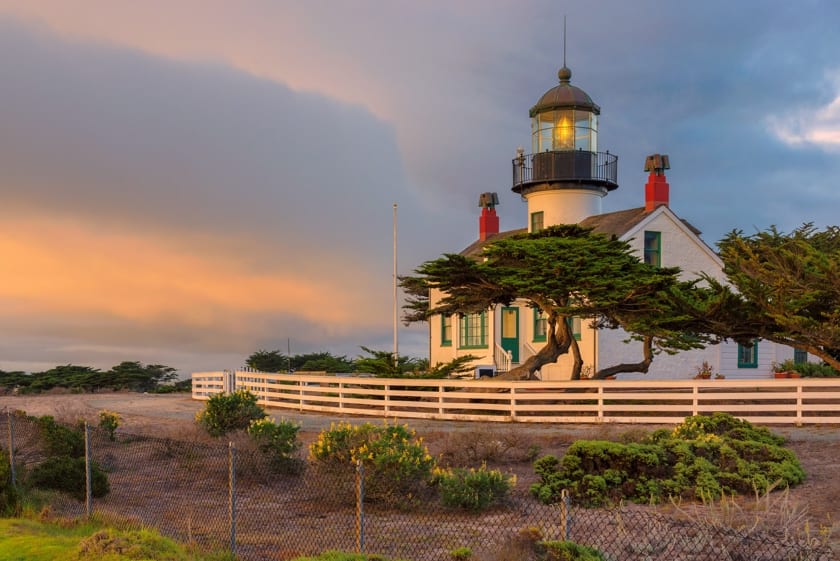
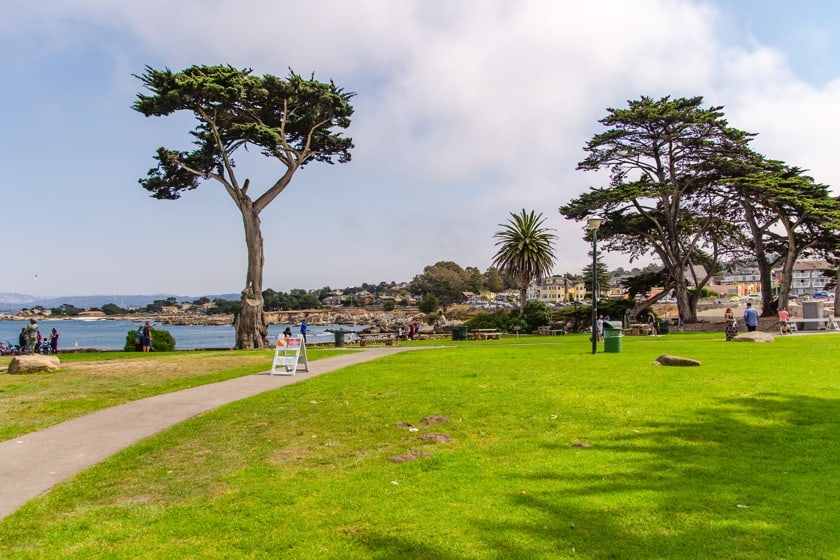
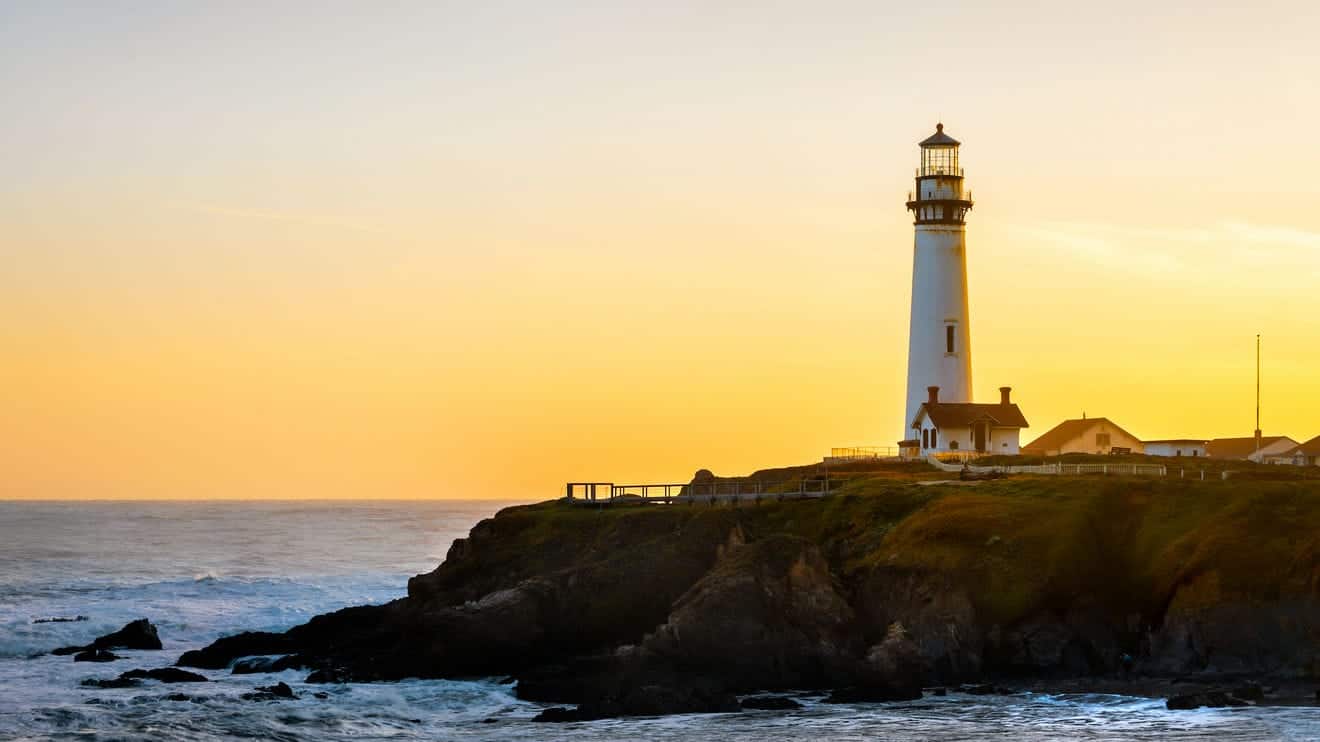
- Pacific Grove, a small town where you’ll find numerous historic buildings and a strikingly scenic rocky, rugged coastline. Don’t miss the beautiful Lovers Point beach and the old Point Pinos lighthouse.
If you have a little more time, you can head down the beautiful Highway 1, one of California’s most famous roads, and make a beeline for its most scenic area, where the most striking views are concentrated: this is the Big Sur area, where you can find all the information in our dedicated article.
Photo Gallery: Shots from an on the road along the 17 Mile Drive